Does Pet Insurance Cover Dog Hydrotherapy? (2026 Guide)
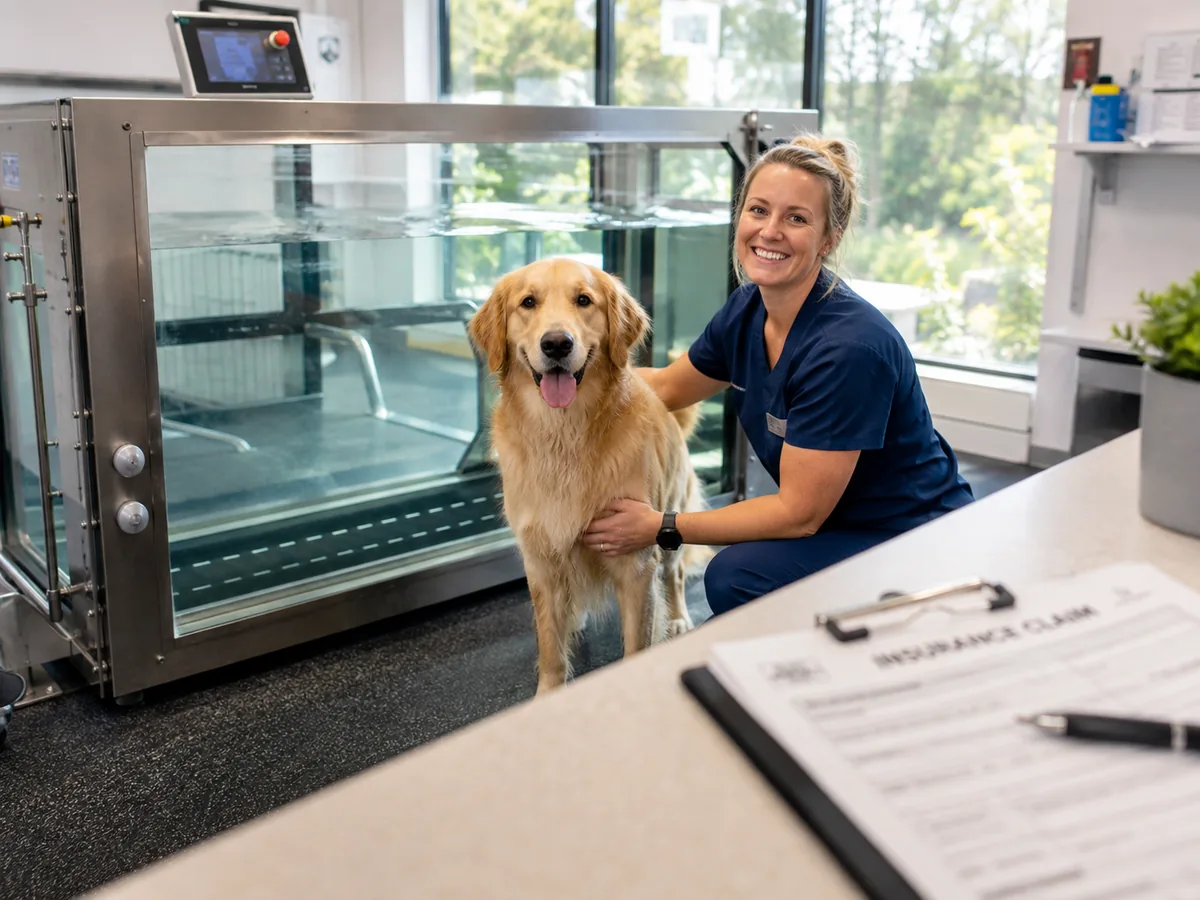
In short: Yes, often — but with conditions. Most accident-and-illness pet insurance plans cover hydrotherapy when a veterinarian prescribes it for a covered condition (like ACL surgery recovery). The common traps: it must be 'medically necessary' with a recorded diagnosis, the condition can't be pre-existing, and some insurers require the therapist to be a vet or work under vet supervision. Wellness plans almost never cover it.
The coverage rule of thumb
Pet insurance treats hydrotherapy as physical rehabilitation, and rehabilitation is covered when these line up:
- A covered diagnosis exists. Post-surgical recovery (ACL/CCL, fracture repairs, spinal surgery), diagnosed hip dysplasia, or IVDD on an accident-and-illness plan — yes. General fitness or weight management — no.
- A vet prescribed it. Insurers want “medically necessary” in writing. A one-line referral note with the diagnosis is usually enough to pre-clear the whole course.
- The provider qualifies. Policies commonly require treatment by a licensed veterinarian or a certified rehabilitation professional (CCRP/CCRT) or under direct vet supervision. Independent swim spas can fall outside the wording.
- It started after your waiting period. Pre-existing conditions are excluded everywhere; new injuries after enrollment (plus the waiting period, typically 14 days for illness) are fine.
What the major plan types do
- Accident & illness plans — the standard product. Most include rehab coverage for covered conditions; some insurers (notably the larger US carriers) bundle it, a few require a rider.
- Wellness / preventive add-ons — built for vaccines and dental cleanings, not rehab. Don’t expect hydrotherapy coverage here.
- Accident-only plans — cover rehab only if the underlying event was an accidental injury (e.g., a torn cruciate from a jump), not illness or chronic disease.
How to get a course of treatment approved
- Before booking, call the insurer with the diagnosis and ask: “Is physical rehabilitation a covered benefit for this condition, and what provider credentials do you require?” Get the reference number.
- Get the vet’s written prescription/referral.
- Confirm the clinic’s credentials match the policy wording (this is also just good practice — see our clinic-vetting guide).
- Pay per session or per package, keep itemized invoices, and submit claims promptly.
If the claim is denied
Appeal in writing with the vet’s prescription, the diagnosis, and the policy section that lists rehabilitation or alternative therapy coverage. Denials are often reversed when the paperwork shows medical necessity — the first denial is frequently just a documentation filter.
The takeaway cost picture
If insurance covers, say, 80% after deductible on a $1,200 post-ACL course, your actual exposure is a few hundred dollars — which changes the math in the cost guide substantially. Worth one phone call before the first session.
Common questions
Does insurance cover hydrotherapy for arthritis or weight loss?
Sometimes for diagnosed arthritis under accident-and-illness plans with rehab coverage — chronic-condition wording varies by insurer. Weight-loss-only hydrotherapy is rarely covered, because it isn't tied to a covered diagnosis.
The clinic isn't a veterinary practice. Will insurance still pay?
Often yes, if the policy covers 'alternative therapy' or 'physical rehabilitation', the referring vet prescribes it, and the treating provider meets the policy's credential requirement. Some policies specifically require a licensed veterinarian, vet technician under supervision, or a certified rehab practitioner — check your policy wording before the first session.
What paperwork makes claims go smoothly?
Three things: the referring vet's prescription or referral note with the diagnosis code, itemized invoices from the clinic (not just a card receipt), and the clinic's session notes if the insurer asks. Submit claims per-invoice rather than letting them pile up.
My dog's ACL was torn before I bought insurance. Covered?
Almost certainly not — that's a pre-existing condition, excluded by every major insurer. This is why coverage matters before injuries happen. Some insurers will cover a *new*, unrelated injury on the opposite leg after a waiting period; bilateral-condition clauses vary, so read yours.
Find a clinic near you
Verified canine hydrotherapy providers across the US, searchable by city and state.