What Is Dog Hydrotherapy? How It Works and Who It Helps
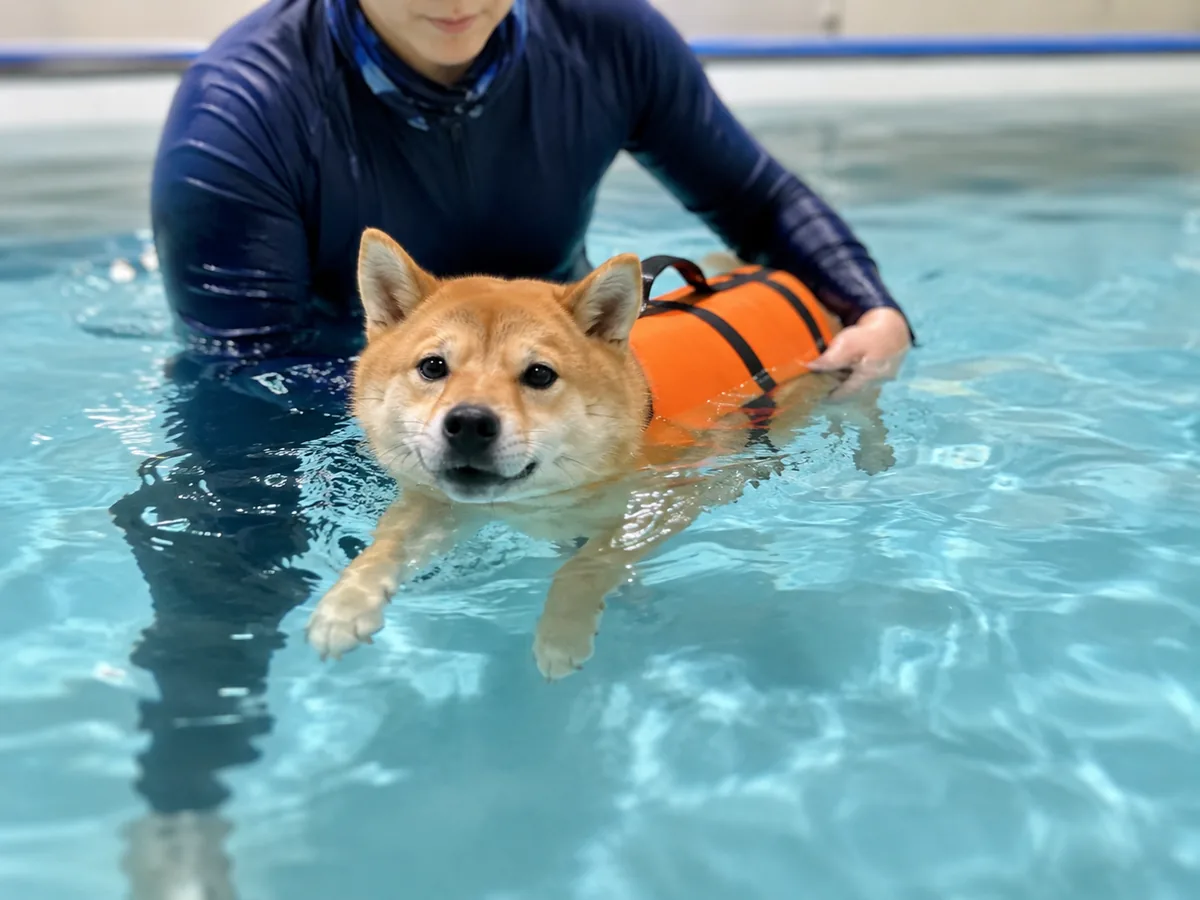
In short: Dog hydrotherapy is veterinarian-supervised exercise in warm water — usually an underwater treadmill or a swim pool. Water supports the dog's weight, so joints move through their full range with a fraction of the impact. It's most commonly prescribed for post-surgical recovery (especially ACL/CCL surgery), hip dysplasia, arthritis, and neurological conditions.
What actually happens in a session
A typical first visit runs 30–60 minutes and starts with an assessment: gait, range of motion, muscle mass, and the dog’s history. Then the work itself, in one of two setups:
- Underwater treadmill. The dog walks on a belt inside a glass chamber while warm water fills to a set height — hock level for strengthening, higher for more unloading. Speed, water level, and duration are all programmed to the dog’s condition. This is the gold standard for post-surgical rehab because the therapist controls exactly how much weight the limb bears.
- Therapeutic swim pool. The dog swims with a floatation vest, often with the therapist in the water guiding direction and supporting the body. Swimming builds cardiovascular fitness and works the shoulders and hips through a large range — useful for conditioning, obesity, and some dysplasia cases.
Sessions end with a rinse and rest. Most dogs are tired afterward — water resistance makes 20 minutes feel like a much longer workout.
The conditions it helps most
Hydrotherapy isn’t a wellness fad; it’s standard-of-care rehab for specific diagnoses:
- Post-ACL/CCL surgery recovery — the single most common reason owners search for it. Controlled walking rebuilds thigh muscle while the repair is still fragile. See our ACL recovery guide.
- Hip and elbow dysplasia — maintains muscle scaffolding around loose joints without pounding them.
- Osteoarthritis — warm water plus low-impact motion keeps arthritic dogs mobile and supports weight loss, which is the single biggest controllable factor in arthritis pain.
- Neurological conditions — IVDD, degenerative myelopathy, and post-stroke rehab. Buoyancy lets weak dogs practice gait patterns they can’t hold on land.
- Obesity and conditioning — for dogs that can’t exercise hard on land yet, and for sport/working dogs building fitness.
How to judge a clinic
Not all hydrotherapy is equal. Before booking, ask:
- Who designed the plan? You want a veterinarian or certified rehab professional (CCRP/CCRT) setting the protocol, not a swim-only technician improvising.
- What water temperature do you run? Warm water (roughly 80–92°F) is therapeutic; cold water tightens muscles.
- Is the therapist in the water or beside it? Either can be fine, but “the dog swims alone while we watch from a chair” is a red flag.
- How do you track progress? Thigh measurements, gait notes, and range-of-motion checks every few sessions show the therapy is being dosed, not just repeated.
Our directory’s clinic listings flag referral policies and certifications as clinics verify their profiles.
What it costs
Expect roughly $40–$90 per session in most US metros, with multi-session packages bringing the per-session price down. We break the numbers down in the cost guide.
Common questions
Is hydrotherapy the same as just swimming my dog in a lake?
No. Therapeutic hydrotherapy uses warm water (typically 80–92°F), a controlled environment, a trained therapist in or beside the water, and a session plan tied to a diagnosis. Free swimming is exercise, but it isn't dosed, warmed, or supervised the same way — and a lake entry can be risky for a dog with a surgical repair.
How many sessions does a dog usually need?
For post-surgical rehab, clinics commonly recommend 1–2 sessions per week for 6–12 weeks, then taper. Chronic conditions like arthritis are often managed with ongoing weekly or bi-weekly sessions. The therapist should reassess and adjust the plan every few visits.
Can any dog do hydrotherapy?
Most dogs can, but there are contraindications: open wounds, some skin conditions, uncontrolled heart or respiratory disease, and recent surgeries without veterinary clearance. Reputable clinics require a vet referral or health history before the first session — that's a good sign, not an obstacle.
What certifications should the therapist have?
Look for CCRP (Certified Canine Rehabilitation Practitioner) or CCRT (Certified Canine Rehabilitation Therapist) credentials, or a licensed veterinary technician/physical therapist working under veterinary oversight. Ask who designed the treatment plan — ideally it's a veterinarian or a certified rehab professional.
Find a clinic near you
Verified canine hydrotherapy providers across the US, searchable by city and state.